Supporting Community Midwives in Yemen: Bringing Reproductive Health Care Closer to Remote Communities
In Yemen, millions of women face barriers to accessing reproductive health services, particularly in rural and hard-to-reach areas where long distances, difficult roads and limited health services can make care harder to reach. Estimates cited by the United Nations Population Fund indicate that around five million women of reproductive age, including pregnant and breastfeeding women, face difficulties accessing reproductive health services.
In these communities, a community midwife may be the closest point of care for a woman during pregnancy, childbirth and the postnatal period.
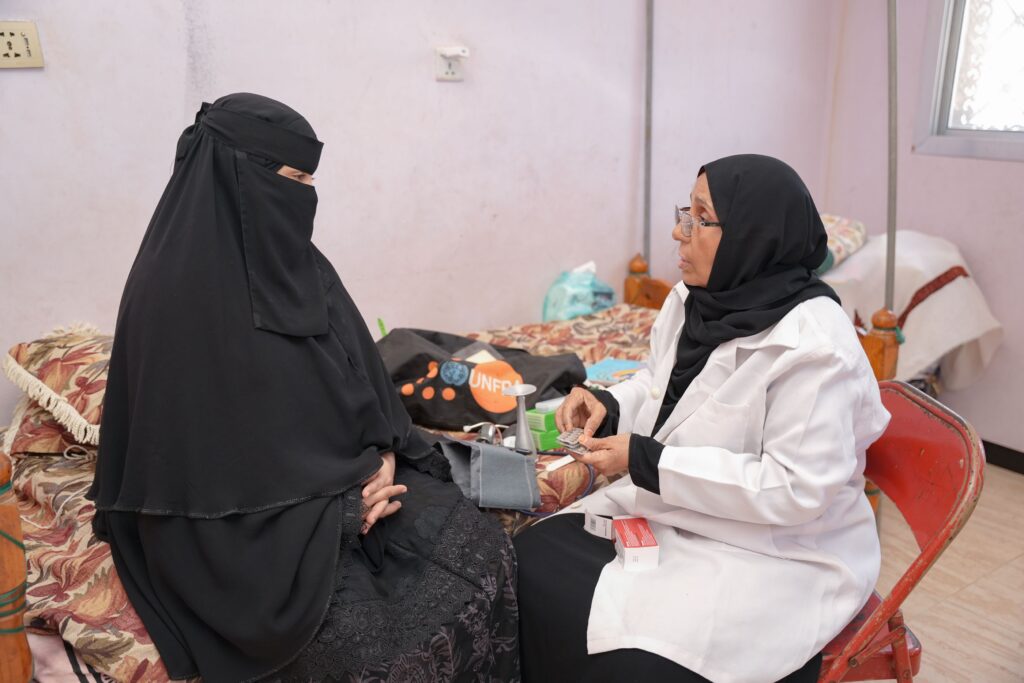
In Bajdar Village, Abyan Governorate, Najeeba Ayyash knows what that means in practice. Her door does not operate by conventional opening hours.
“Here, the service is easy. It’s not tied to specific hours. Whenever someone knocks on my door, I’m ready to help.”
After decades of working in nursing, midwifery and training, Najeeba continues to receive women at her home in Zinjibar District. Some come for check-ups and follow-up care. Others call her for advice. When a case requires more advanced care, referral becomes part of the pathway.
Najeeba describes how people in her community see her home in simple terms:
“People in this area look at my house as if it were a hospital.”
In communities where health services are distant or difficult to reach, her home illustrates a much wider role played by community midwives in Yemen: bringing essential reproductive and maternal health care closer to women where they live.
20 Community Midwives Serving Four Governorates
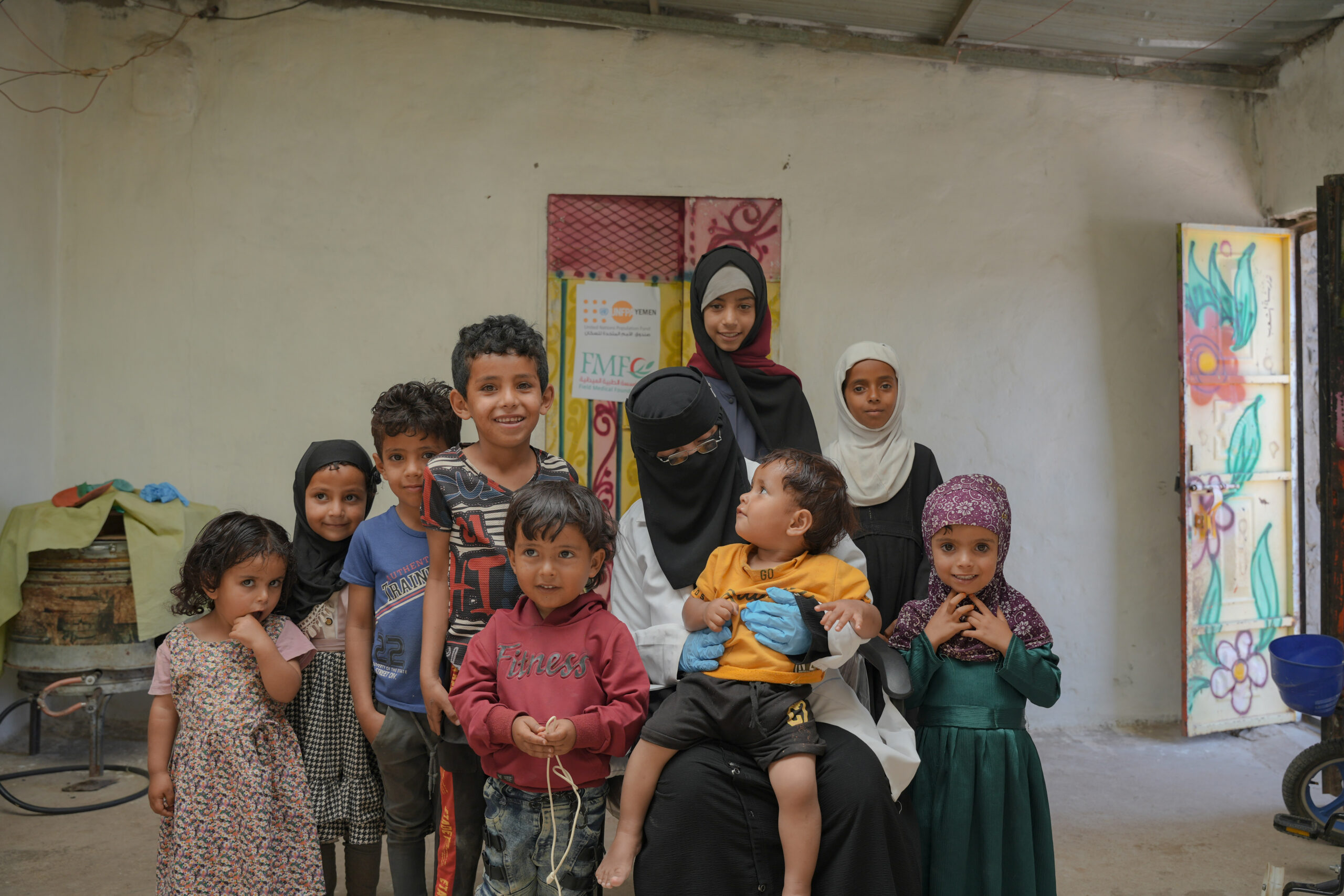
Throughout 2026, the Field Medical Foundation (FMF), with support from the United Nations Population Fund (UNFPA), has continued supporting 20 community midwives across 11 districts in Aden, Abyan, Shabwa and Al-Dhale’e governorates.
Nominated by the respective Governorate Health Offices, the midwives come from the communities they serve. Through home-based care, home visits and community outreach, they provide essential reproductive and maternal health services outside supported health facilities.
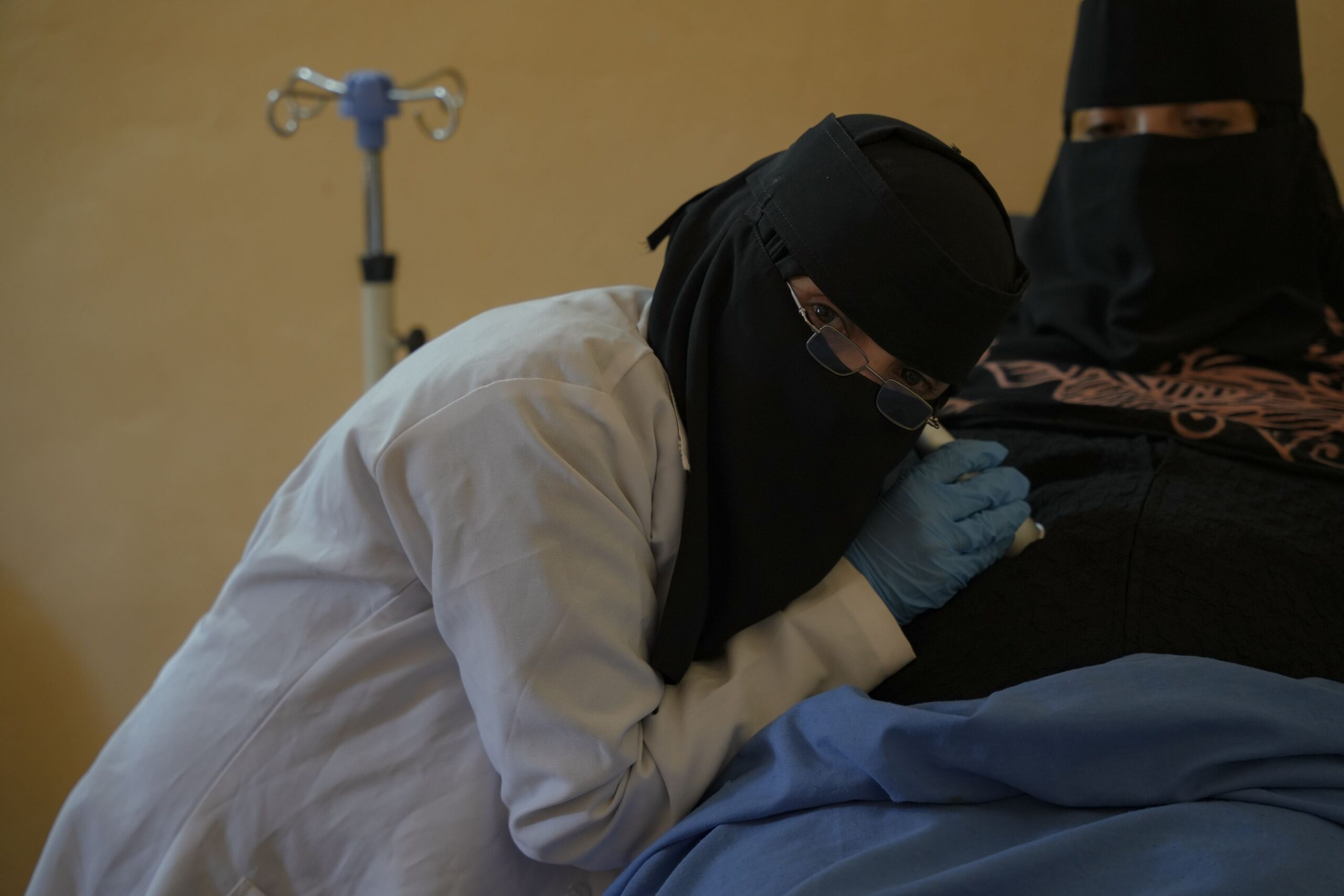
Their services include antenatal care, home deliveries, postnatal care, family planning, health education, identification of complications and referral of cases requiring more specialized care.
During the first six months of 2026 alone, the 20 midwives recorded 4,239 reproductive and maternal health service contacts, including:
- 575 deliveries
- 1,286 antenatal care contacts
- 717 postnatal care contacts
- 1,661 family planning services
Behind these figures are women seeking care in communities where distance, difficult roads and limited transport can make reaching a health facility more challenging.
When Care Begins at Home
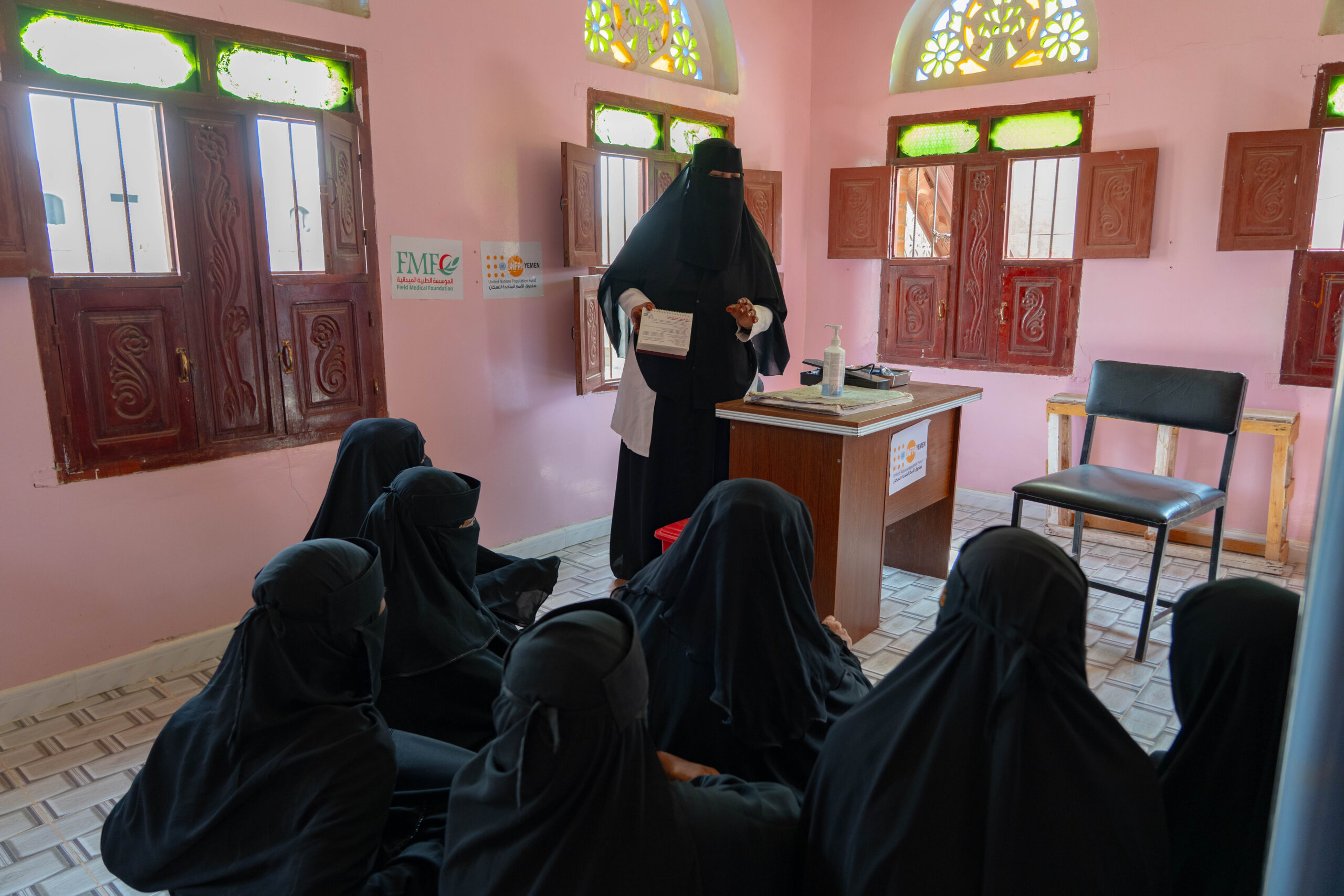
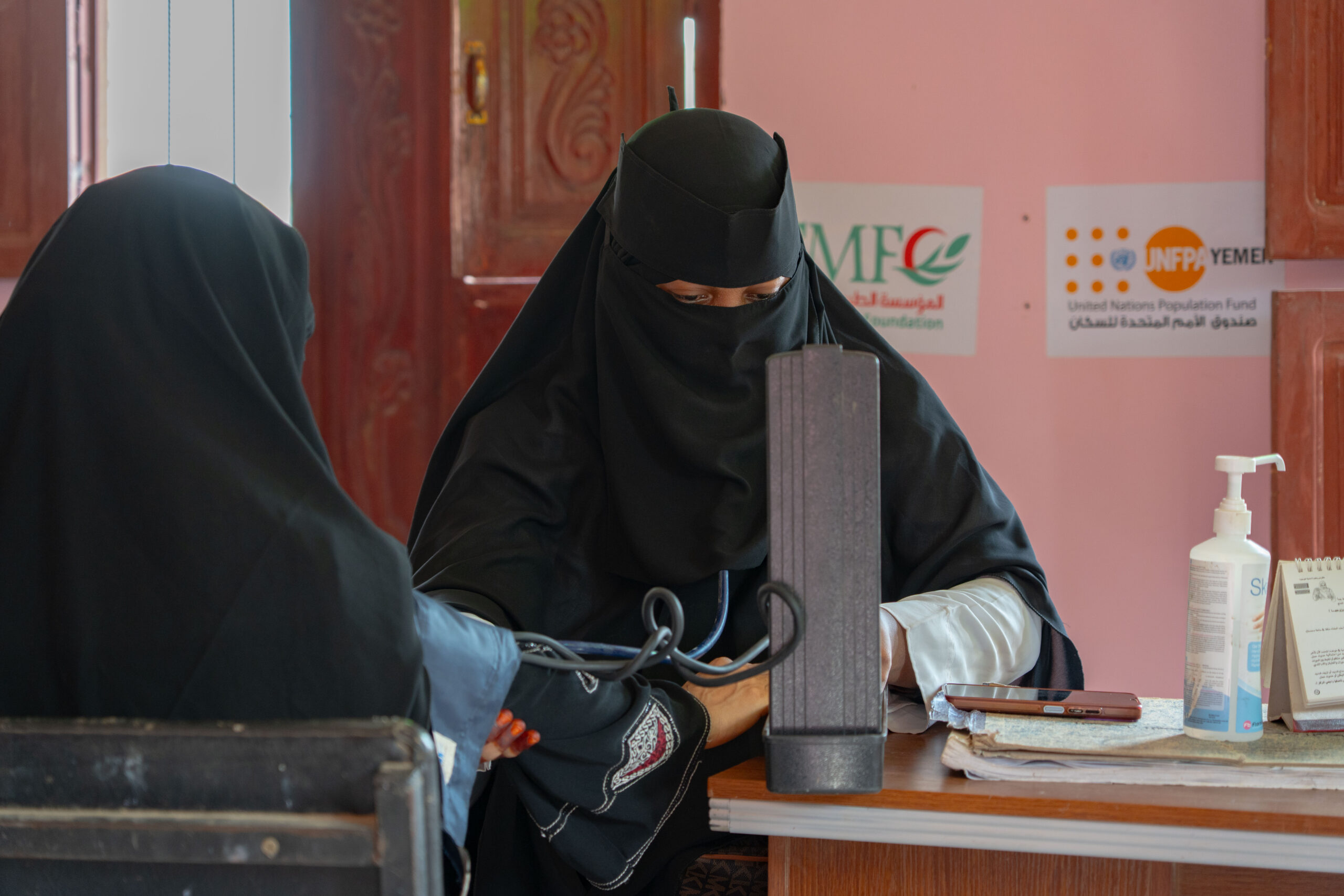
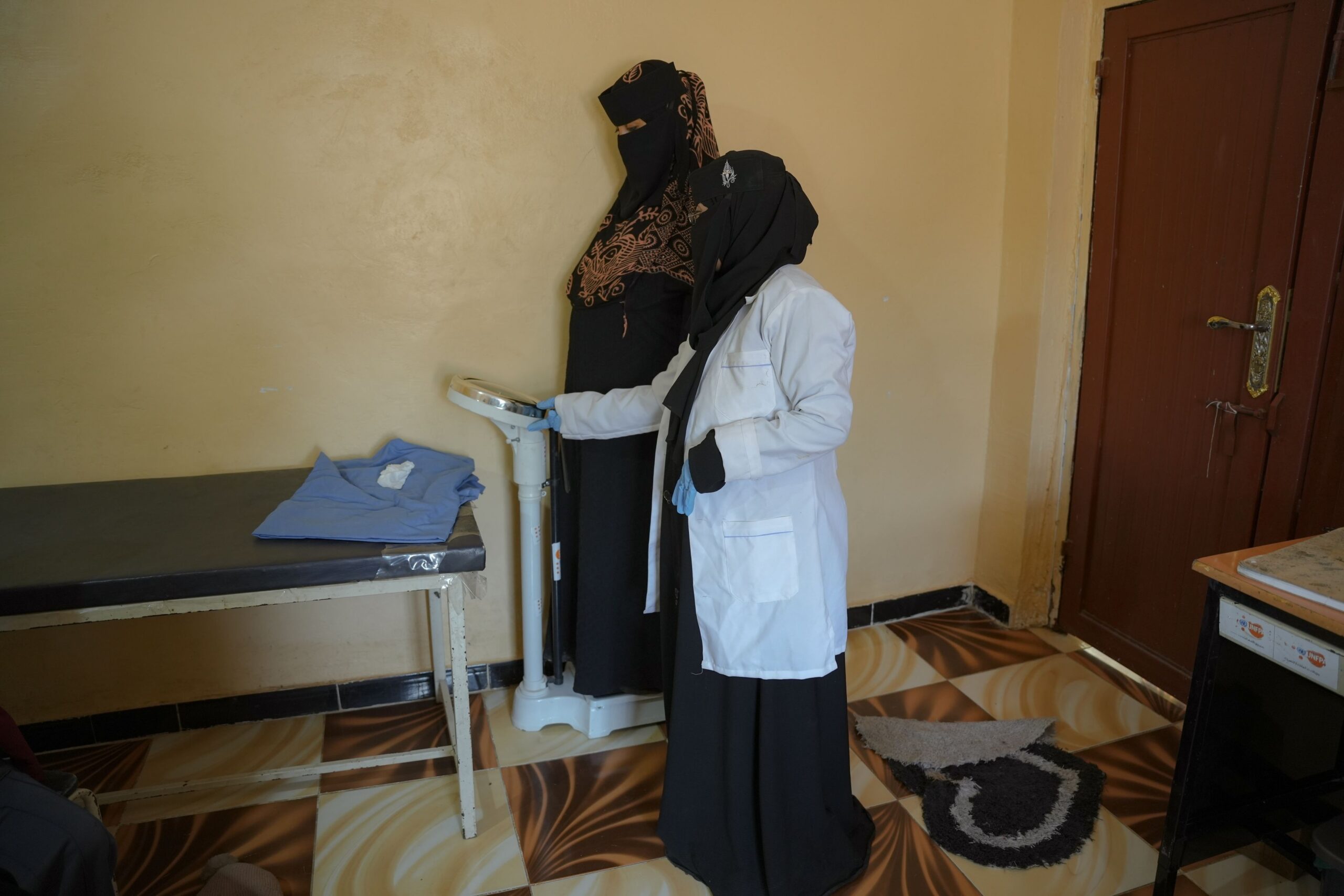
In Al-Sha’ab Village in Jahaf District, Al-Dhale’e Governorate, community midwife Saba Ali Saleh knows these barriers well.
The roads are difficult, transport options are limited and health facilities are far away. Against this backdrop, Saba receives women in a clinic inside her home and provides care within the community.
Working in health care had been an ambition since childhood.
“Since I was young, I dreamed of studying and becoming a doctor. Alhamdulillah, I became a midwife.”
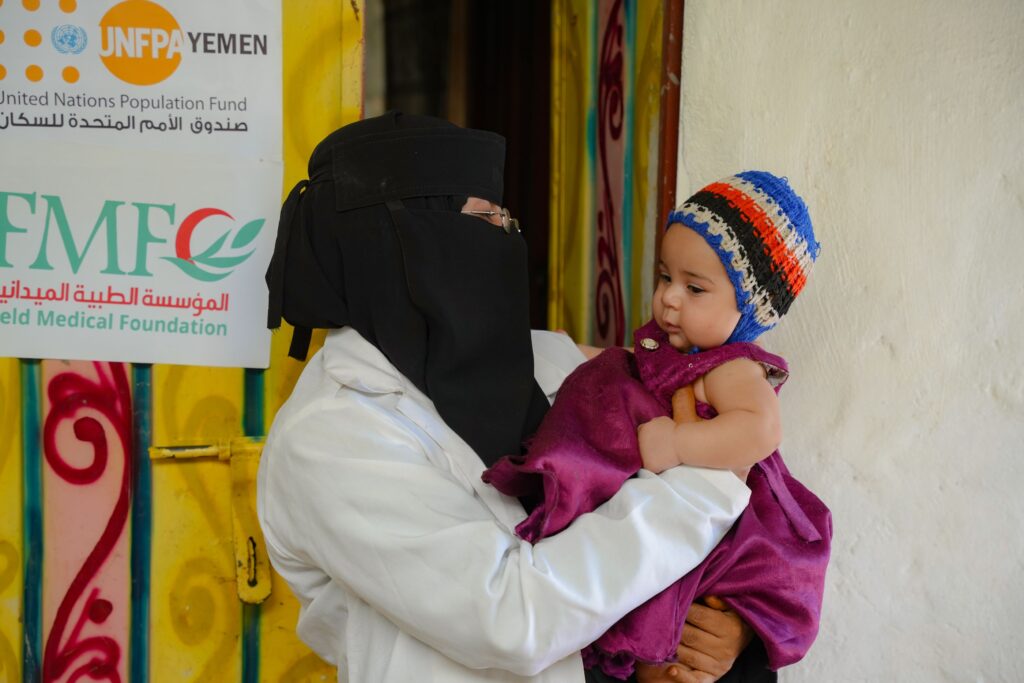
For Saba, care does not begin and end with childbirth. She follows women through pregnancy, offers advice and responds when care is needed. When a case is beyond what she can manage with the resources available to her, referral to a higher level of care becomes essential.
This proximity is one of the community midwife’s most important strengths: she can serve as an accessible first point of care while helping connect women to the wider health system when specialized services are required.
Care Before, During and After Birth
The first-half results also show that community midwifery is about much more than attending deliveries.
The midwives recorded 1,286 antenatal care contacts, compared with 575 deliveries, followed by 717 postnatal care contacts.
Family planning represented the largest category, with 1,661 services recorded during the six-month period.
Together, these figures show a continuum of reproductive health care that extends from pregnancy through childbirth and the postnatal period, alongside family planning information and services.
Project reporting also highlights the role of community midwives in monitoring women, recognizing potential complications and facilitating timely referral when needs go beyond what can safely be managed at community level.
Supporting the Women Who Provide the Care
Having a trained midwife inside a community does not remove the challenges she faces.
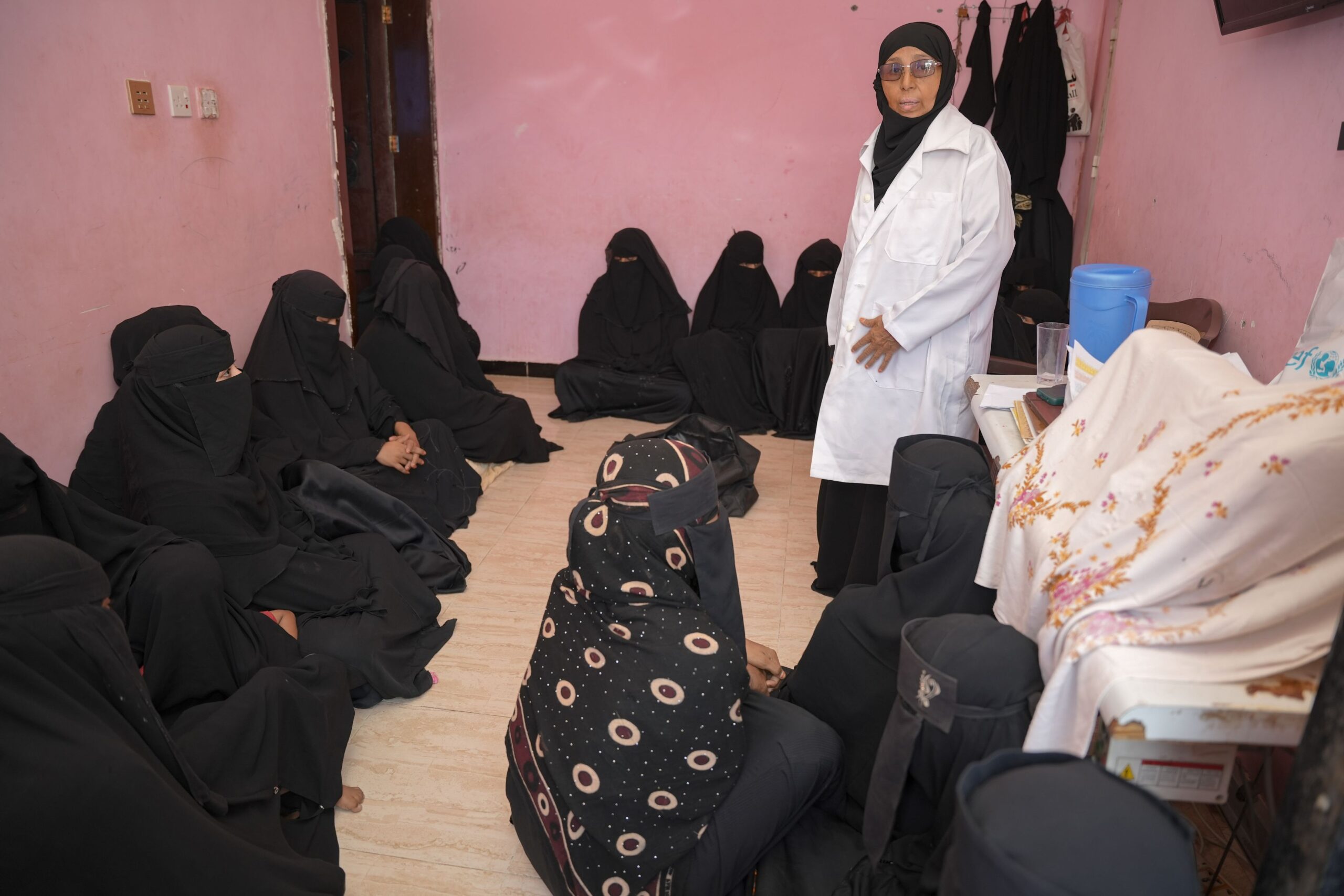
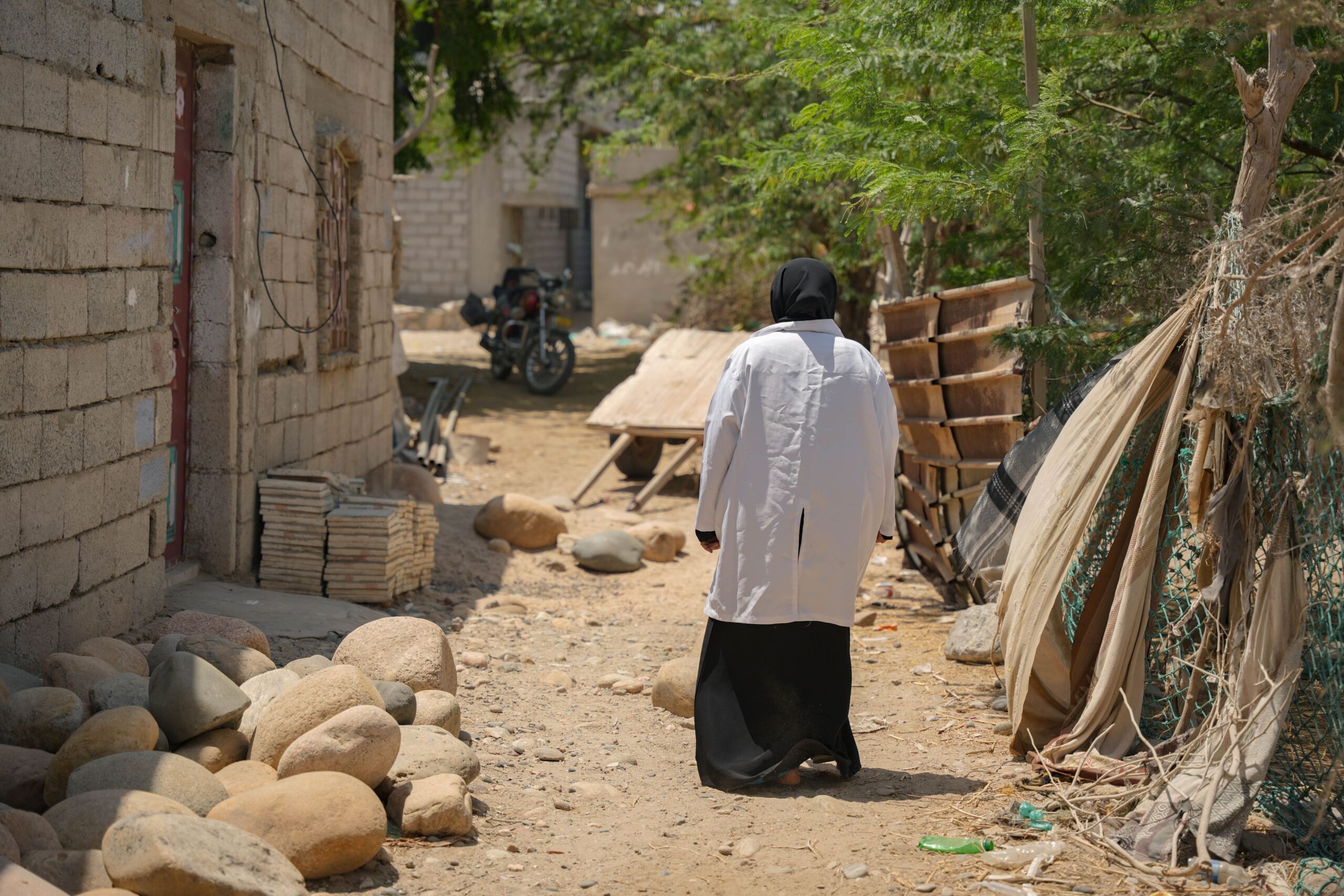
Both Saba’s and Najeeba’s experiences point to persistent gaps, including limited equipment and medicines, transportation difficulties and long distances to health facilities.
Saba works with the resources available in her home clinic. The incentive she receives through the project helps meet some household needs and allows her to replenish some medicines.
“If they give me something after delivery or treatment, I take it. If they don’t, I don’t ask. I provide care for people first — not for income.”
Najeeba, meanwhile, has continued serving women even after retiring from formal service. She works with basic personal equipment as well as a kit documented as having been provided through the project.
For her, the monthly incentive has also had a personal effect.
“My current work has lifted my morale greatly. It has motivated me even more to serve people.”
Their experiences highlight a central part of investing in community midwifery: sustaining reproductive health services also requires sustained support for the women delivering them.
A Link Between Communities and the Health System
Home-based midwifery cannot replace health facilities equipped to manage complex obstetric and medical conditions, nor should it be presented as doing so.
Its value lies partly in addressing another critical barrier: the distance between women and health services.
A trained midwife based within the community can provide routine care, reproductive health services and counseling, identify warning signs and help women reach higher-level care when necessary.
Reporting from the first half of 2026 documents continued antenatal, delivery, postnatal and family planning services, alongside referral for complicated cases.
Community midwives therefore serve not only as providers of care, but also as an important link between households, communities and the wider health system.
Investing in Midwives Means Investing in Access
From Abyan to Al-Dhale’e, Najeeba and Saba work in different communities and bring different experiences to their roles. Yet their stories meet at the same point: making care more accessible to women.
Behind them are another 18 community midwives working across Aden, Abyan, Shabwa and Al-Dhale’e.
Together, they recorded more than 4,200 reproductive and maternal health service contacts in just six months.
But the importance of their work is not captured by numbers alone.
In communities where reaching a health facility can be difficult, supporting community midwives means strengthening a point of care that already exists within the community one that women know, can reach and can rely on for essential services and connection to more specialized care when needed.
For Najeeba, that connection can begin with something as simple as a knock on her door, And, as she says, she is ready to answer.
read more Health sector program