Introduction: A Farmer’s Journey of Resilience
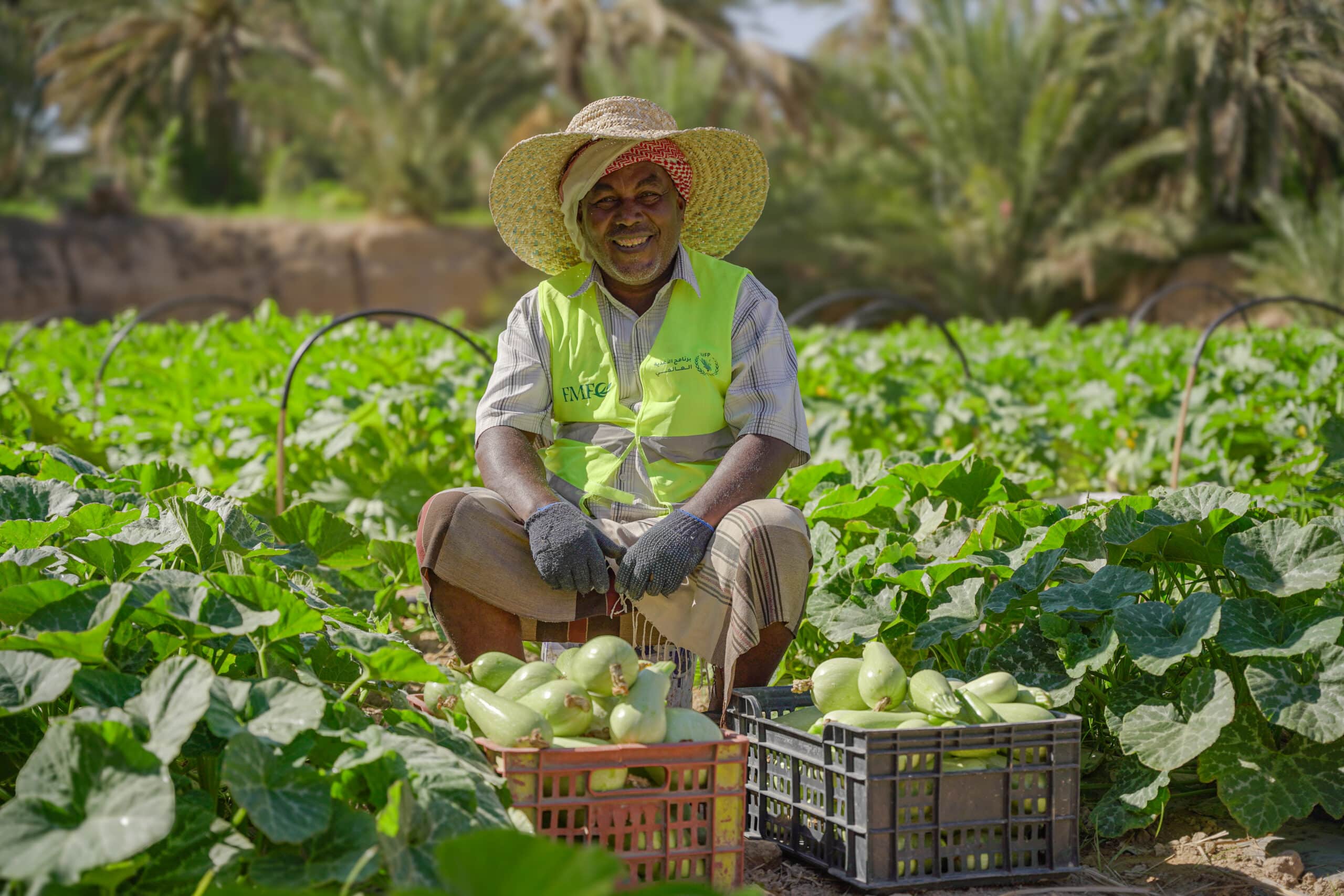
In the Al-Khoweira area, Sah District, Hadramout Governorate, 62-year-old Saleh Yamaan begins recounting his agricultural journey, a testament to the resilience of farmers in the region. Saleh, like many others, faced numerous challenges in his agricultural pursuits, from harsh climate changes to the rising costs of production supplies and the shortage of essential resources. “We faced a severe shortage of seeds, and the cost of establishing an irrigation system was very high, making it difficult to maintain agricultural production,” Saleh recalls. Despite these difficulties, he remained committed to the land, striving to improve his agricultural situation. His story, and that of many others, took a significant turn with the intervention of the From Food to Resilience project.
Introducing Modern Agricultural Techniques
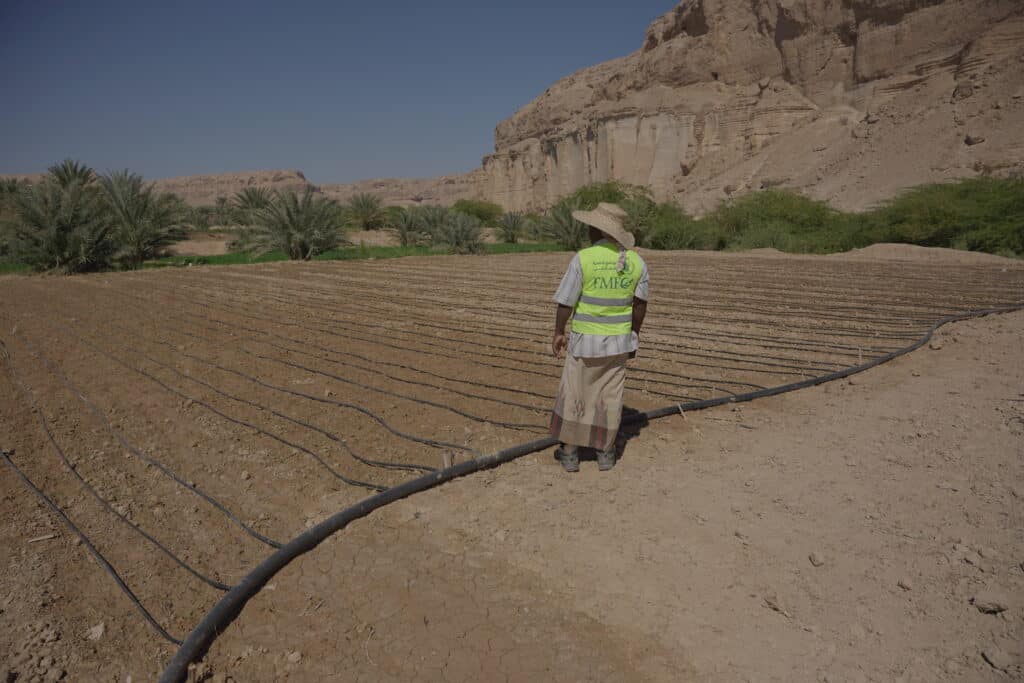
Thanks to the efforts of the Food to Resilience project in supporting farmers in the Sah District, modern agricultural techniques were introduced for the first time, resulting in a significant shift in productivity. “The support we received through modern agricultural techniques profoundly impacted improving our production. We cultivated five hectares of land using these techniques, significantly increasing our productivity and raising our income,” Saleh adds. The project’s intervention led to a substantial increase in Saleh’s income and productivity, demonstrating the tangible benefits of the project.
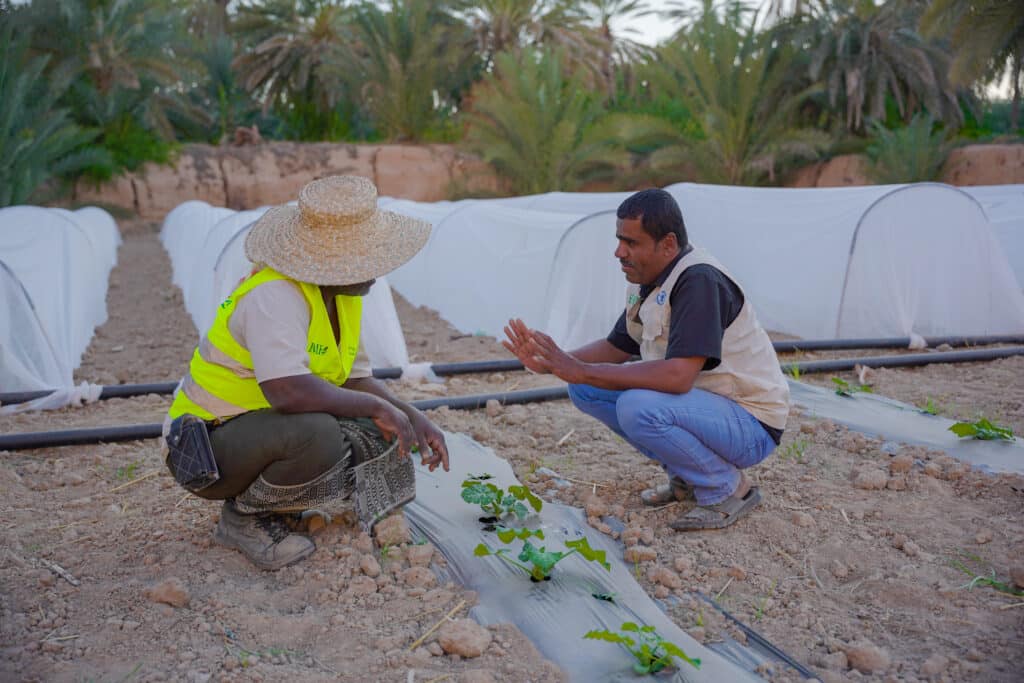
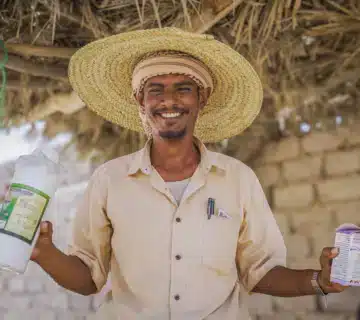
The agricultural engineer provides innovative tips and solutions to maintain crop quality and increase yield
Empowering Farmers and Expanding Opportunities
The project’s goal is to create an environment that empowers farmers to become self-sufficient in earning their livelihoods through a series of activities. These activities include rehabilitating agricultural lands, upgrading irrigation channels and water sources, providing agricultural training and consultations, and supplying seeds and drip irrigation systems. Additionally, innovative agricultural techniques like agricultural tunnels were introduced. “We started cultivating eggplant, zucchini, onions, and green peppers. We are now in the harvesting phase of eggplant and distributing it to the markets,” Saleh proudly says. The project’s comprehensive activities, from land rehabilitation to the introduction of new crops, have significantly impacted the community.
Sustainable Practices for the Future
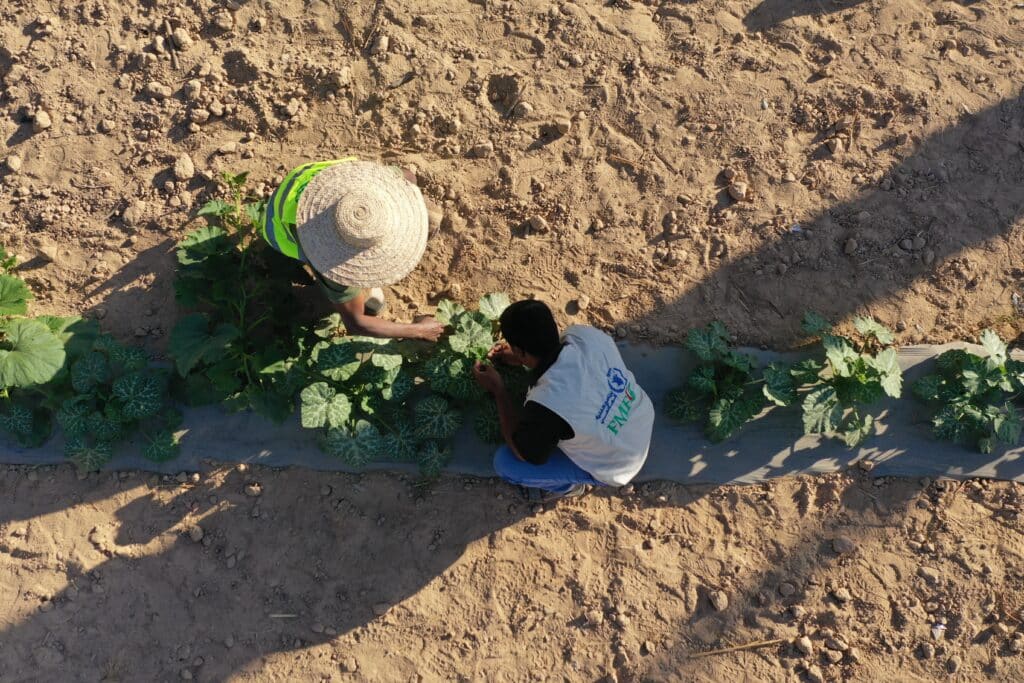
The project provides direct support and focuses on changing how resources are managed and promoting sustainable practices. “Today, we enjoy greater savings in income and water usage, and the work has become easier and more efficient. This project was an important step, and we hope it expands to all areas of Sah to achieve sustainable agricultural prosperity in the region,” Saleh says.
 After
After
 Before