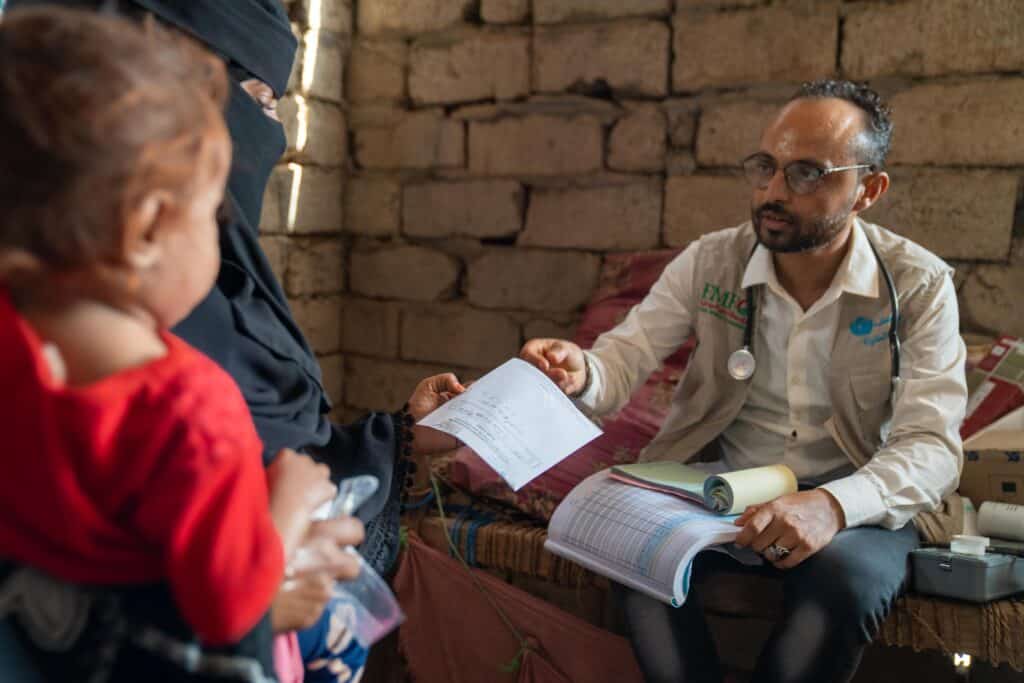
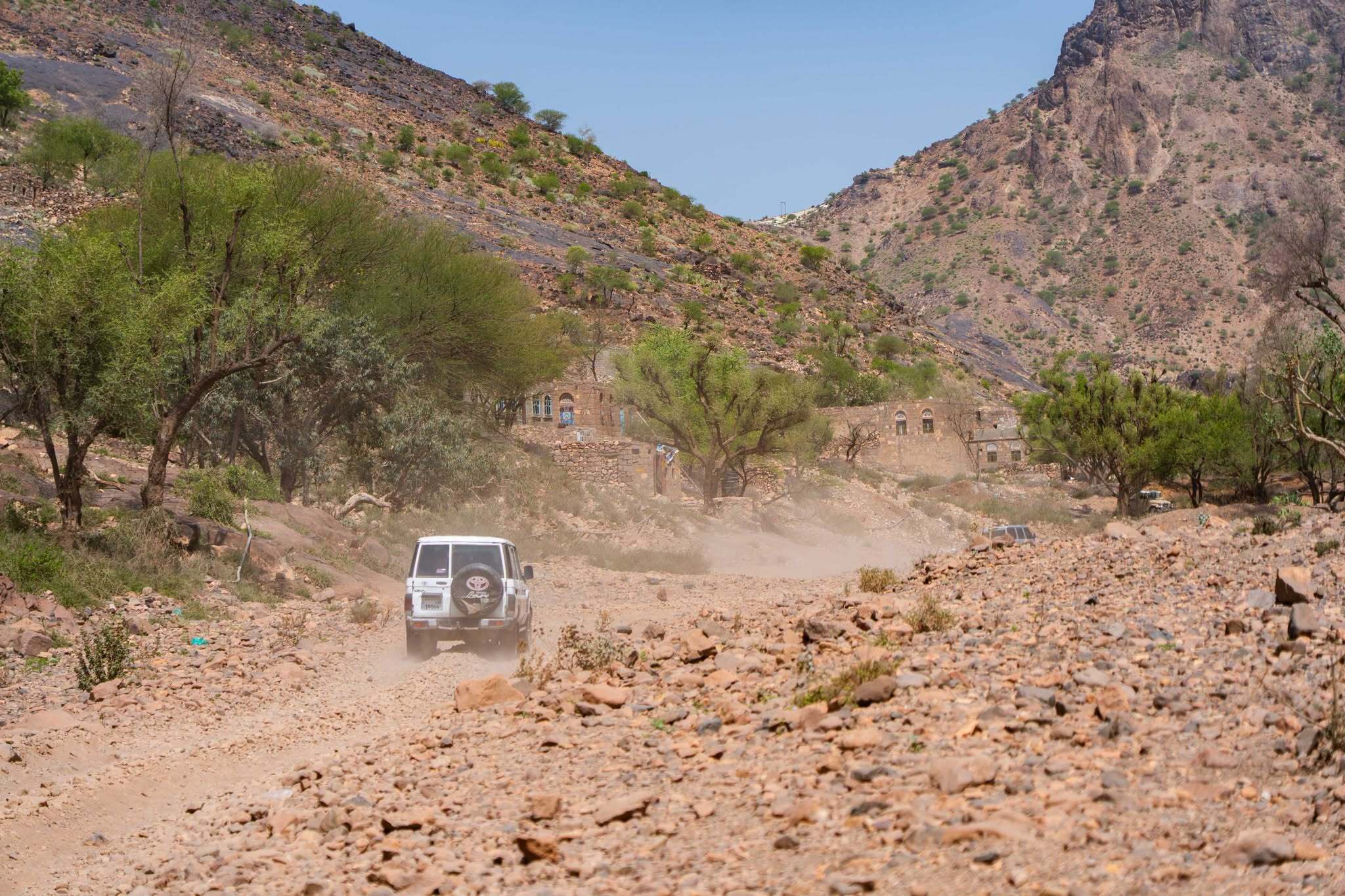
In the scattered villages of Al Azareq, tucked between the mountains and valleys of Al Dhale’e, reaching the nearest health facility was never a short trip. For many families it meant hours of walking across rugged terrain — and precious time that could mean the difference between life and death. Today, that equation has changed. Families no longer have to travel in search of care. Care now comes to them.
When Distance Becomes a Barrier to Care
In Al Azareq, where most families depend on farming and herding to make a living, the rugged mountain terrain turns access to basic health services into a daily struggle. Seasonal diseases and malnutrition remain among the heaviest health burdens, hitting children and women hardest.
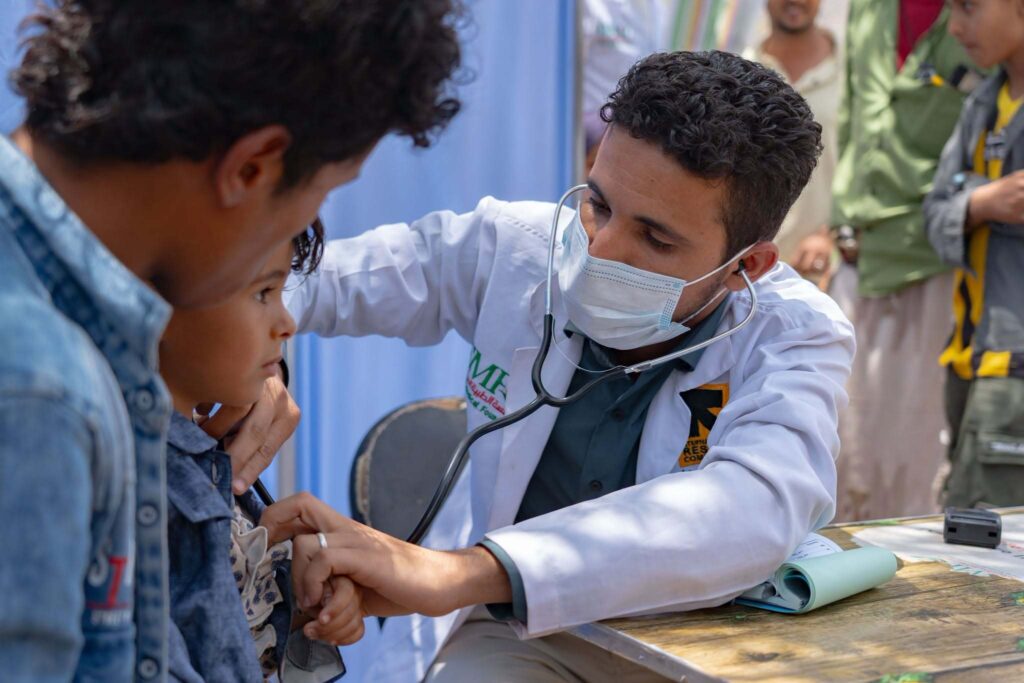
A mobile team doctor examines and cares for a young child.
Yet people need more than treatment when they fall ill. They need regular, nearby care that ensures prevention, early detection, and continuity — a gap that is especially hard to close in remote areas.
Care That Moves Toward People
In remote areas, long distances and the absence of nearby facilities become a wall that keeps families from getting care in time. This is where the mobile medical team makes the difference. Instead of waiting for patients to reach a facility, the medical team travels to villages and communities, bringing an integrated package of health services to people’s doorsteps.
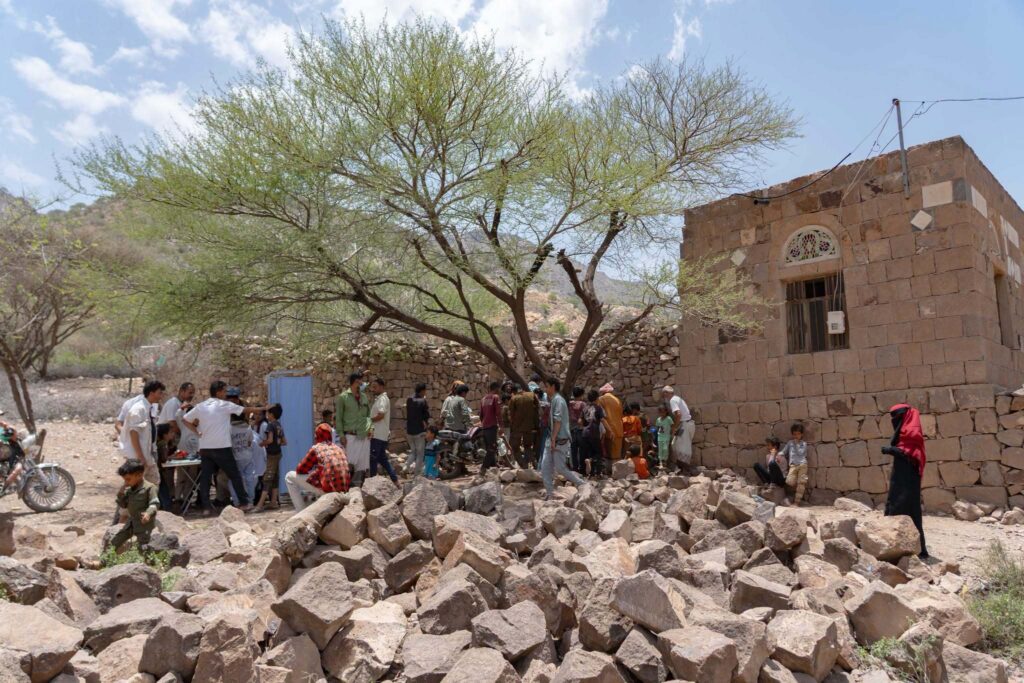
Villagers gather to welcome the arrival of the mobile medical team.
In a single visit, a family can receive:
- General medical consultations
- Integrated child health care
- Nutrition services and early detection of malnutrition
- Childhood immunization
- Reproductive health and safe motherhood services
- Health awareness and counseling
- Essential medicines
This integrated approach spares families the burden of travel while strengthening preventive care for those who need it most.
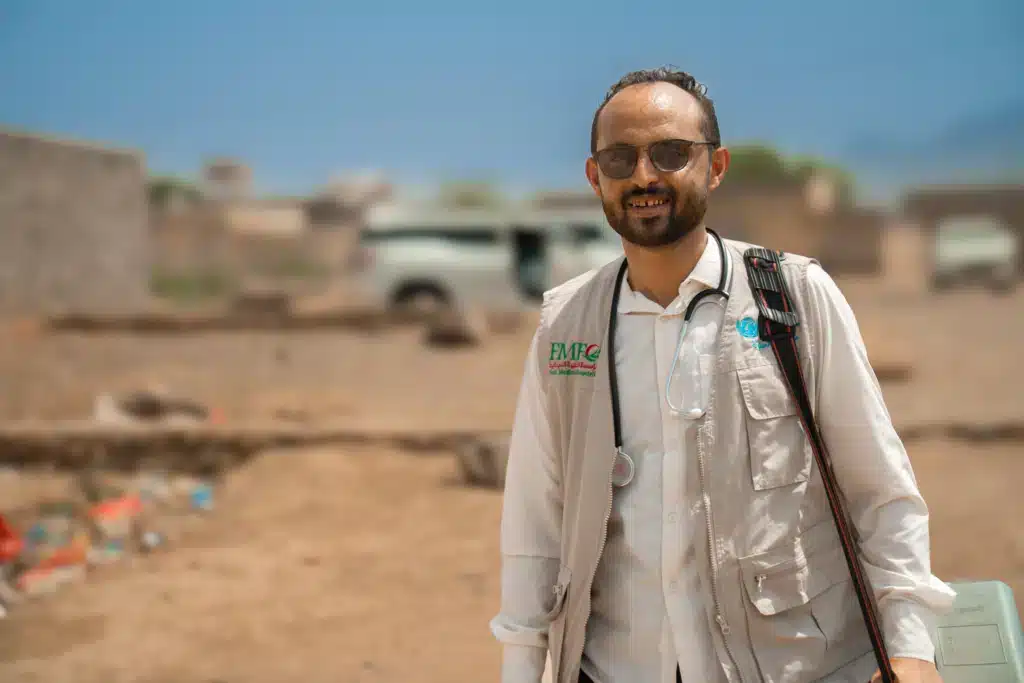
Since my first days with the mobile clinic, I have seen just how desperate families in remote areas are for even basic health care, especially as the tough economic situation makes things harder,”
Jameel Abdulwahid,a mobile unit physician
Delivering Dignity – And More
These clinics are more than vehicles—they are traveling beacons of dignity and hope. Each team is equipped with essential medicines and guided by a simple mission: care shall come to you.
The results speak volumes:
- Screened 24,284 children under 5 for malnutrition.
- Helped 353 children with Severe Acute Malnutrition access urgent treatment.
- Provided measles vaccinations for 290 children in hard-to-reach communities.
- Conducted outreach for 163,457 people, especially mothers, delivering vital health education through local volunteers.
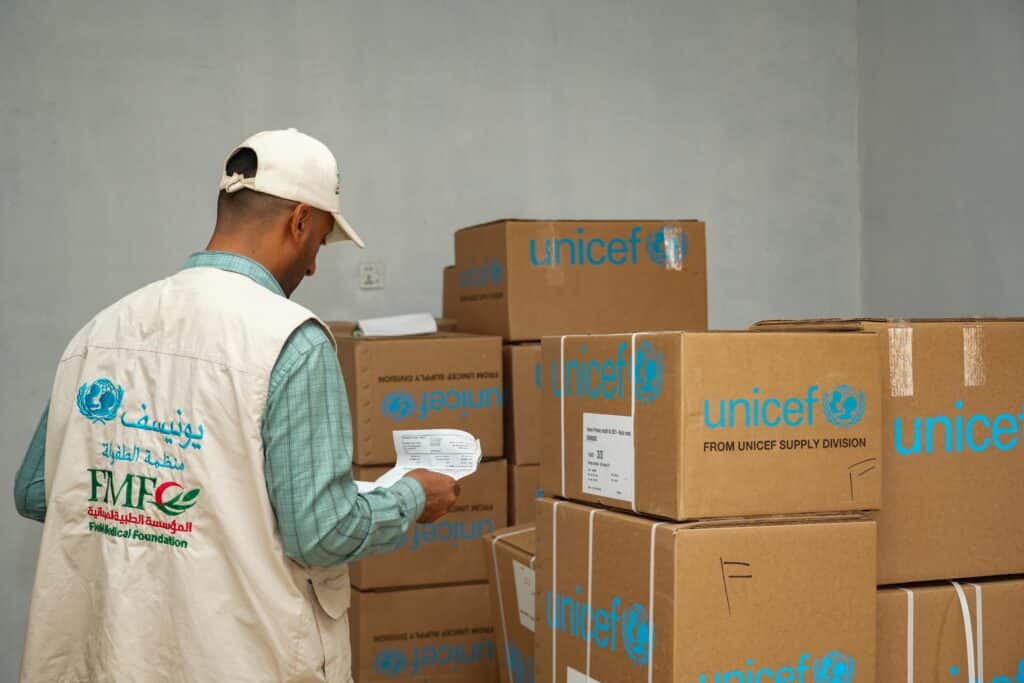
Preparing medicines for distribution to the mobile clinic
And, perhaps most importantly, they arrived where help was needed most—villages all but written off and residents who feared they’d been forgotten.
Community at the Heart
This life-changing work wasn’t easy. The FMF teams braved rugged terrain, resource shortages, and security risks near conflicted frontlines. Still, all barriers faded in the face of one undeniable truth: every child treated, every mother cared for, was a victory against the odds.
In addition to direct health services, the project established 29 community committees—local watchdogs and advocates who help monitor, guide, and sustain care delivery even after the mobile vans drive away.
Healthcare, Decentralized and Restored
Through determination and partnership, FMF and UNICEF have transformed access to healthcare in Al Hudaydah. Distance is no longer an excuse for inequity. Every mobile clinic is a moving story of resilience, compassion, and equity, turning the page for communities that deserve to be remembered and served.
Here, in Yemen’s most remote villages, hope rides on four wheels—and no one is left behind.