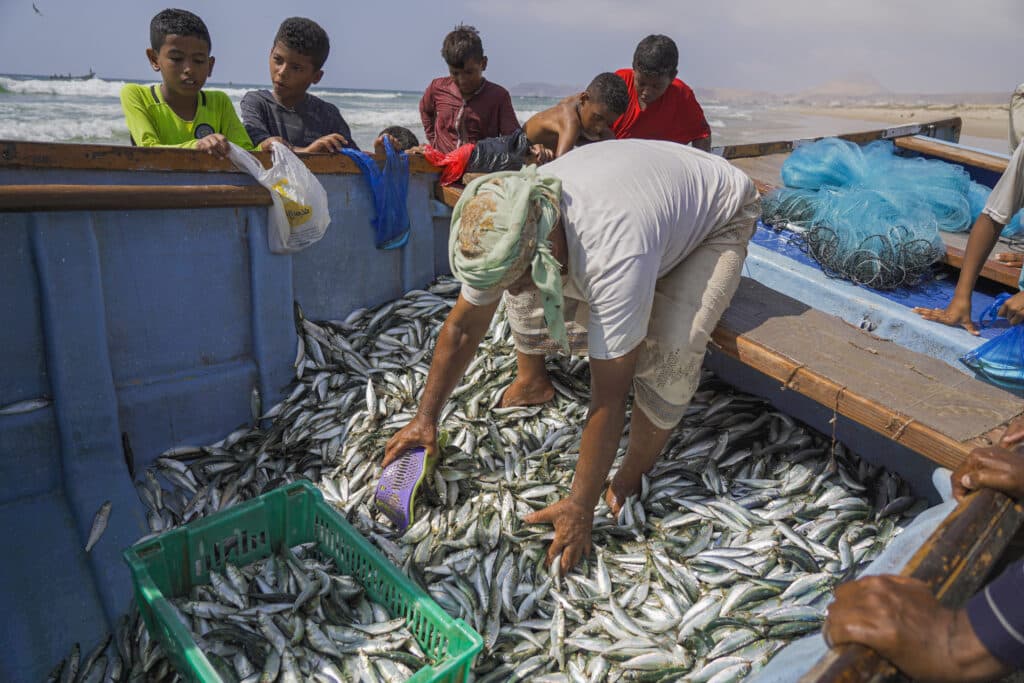
In the city of Mukalla, on the shores of the Rukb area, Anwar Ahmed Bakhwa, a fifty-year-old fisherman supporting his family of five, silently struggled with accumulated challenges. Faced with rising fuel prices, a broken fiberglass boat, and torn nets, his profession, which he depended on to feed his family, seemed to be fading away. “Whenever my boat broke down or my nets tore, I felt helpless. I had to rely on others to fix them, which burdened me with costs I couldn’t afford,” Anwar recounts sadly.
A Turning Point Through the ‘Food to Resilience’ Project
However, the turning point came when he participated in a training course for the ‘Food to Resilience’ project. This project aims to support livelihoods by providing skills training and temporary financial support to help individuals become self-sufficient and reduce their reliance on food aid.
New Skills Acquired by Anwar
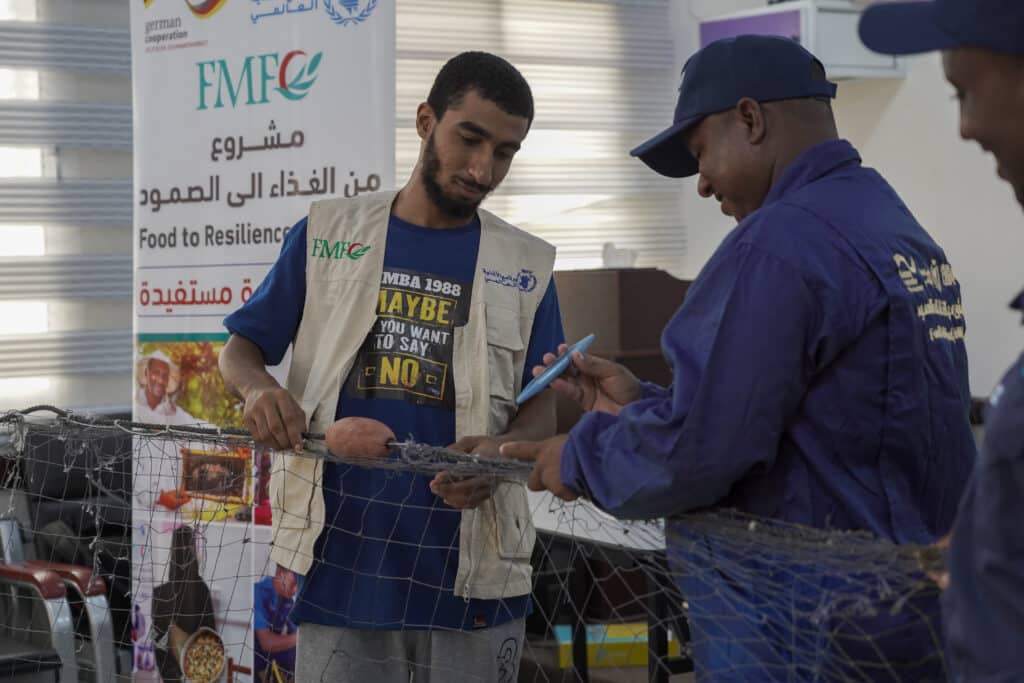
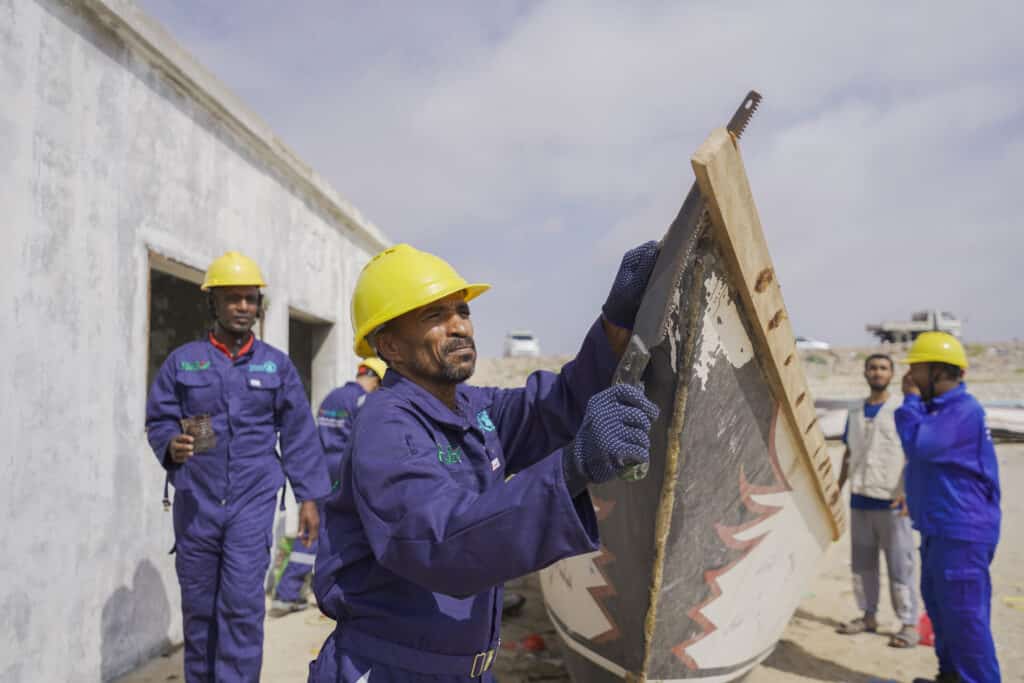
Through several interventions, Anwar learned to repair his boat, from mending cracks to applying sealants to protect it from salty seawater. He acquired skills in making and maintaining nets, reducing the burden of buying or repairing them from specialists. Most importantly, he learned to use a fish finder, which helped him increase his productivity by accurately locating fish schools.
Anwar as a Role Model in His Community
“For the first time, I have control over my work. I have become less dependent on others and more efficient in facing daily challenges,” Anwar proudly says. Today, Anwar is no longer just a fisherman supporting his family; he has become a role model in his community. Thanks to the skills he acquired, he has reduced his costs, doubled his production, and now helped other fishermen repair their boats and nets, earning him the respect of everyone.
Closing: About the ‘Food to Resilience’ Project
“This project was not just training. It has given me a new life. Because of it, I have become stronger and more capable of facing the waves that stand in my way,” Anwar adds.
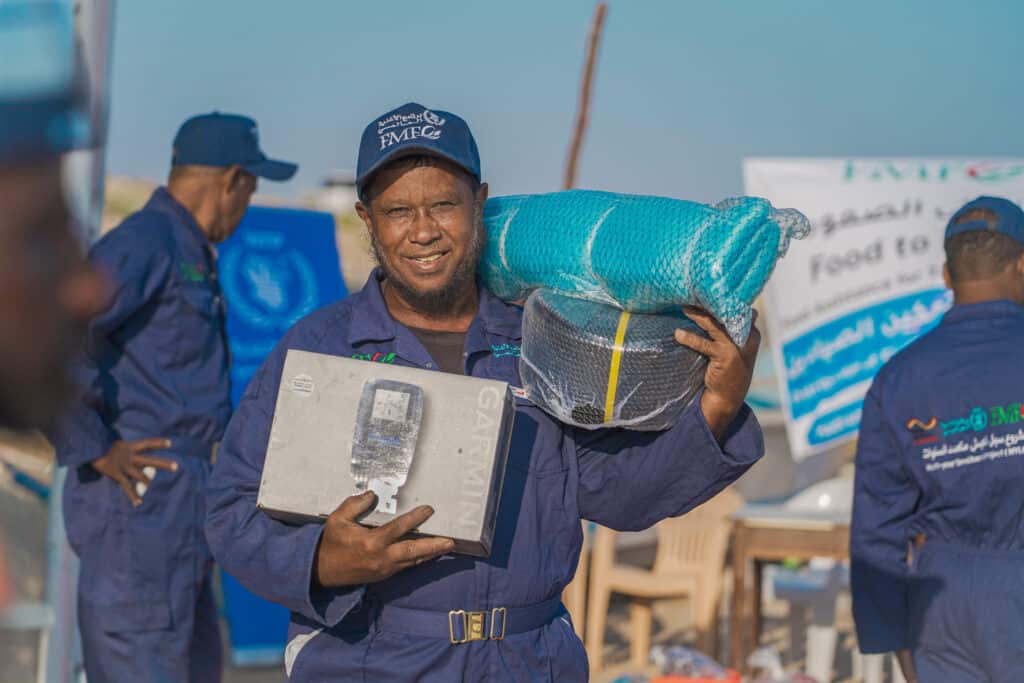
The ‘Food to Resilience’ project, implemented by the Field Medical Foundation in partnership with the World Food Program, supports livelihoods by providing skills training and temporary financial assistance. It aims to help individuals become self-sufficient and reduce their reliance on food aid. Recently, fifty fishermen in the Rokob area of Mukalla received intensive training on boat and net maintenance, as well as the use of fish finders, along with an empowerment grant to support their fishing activities.